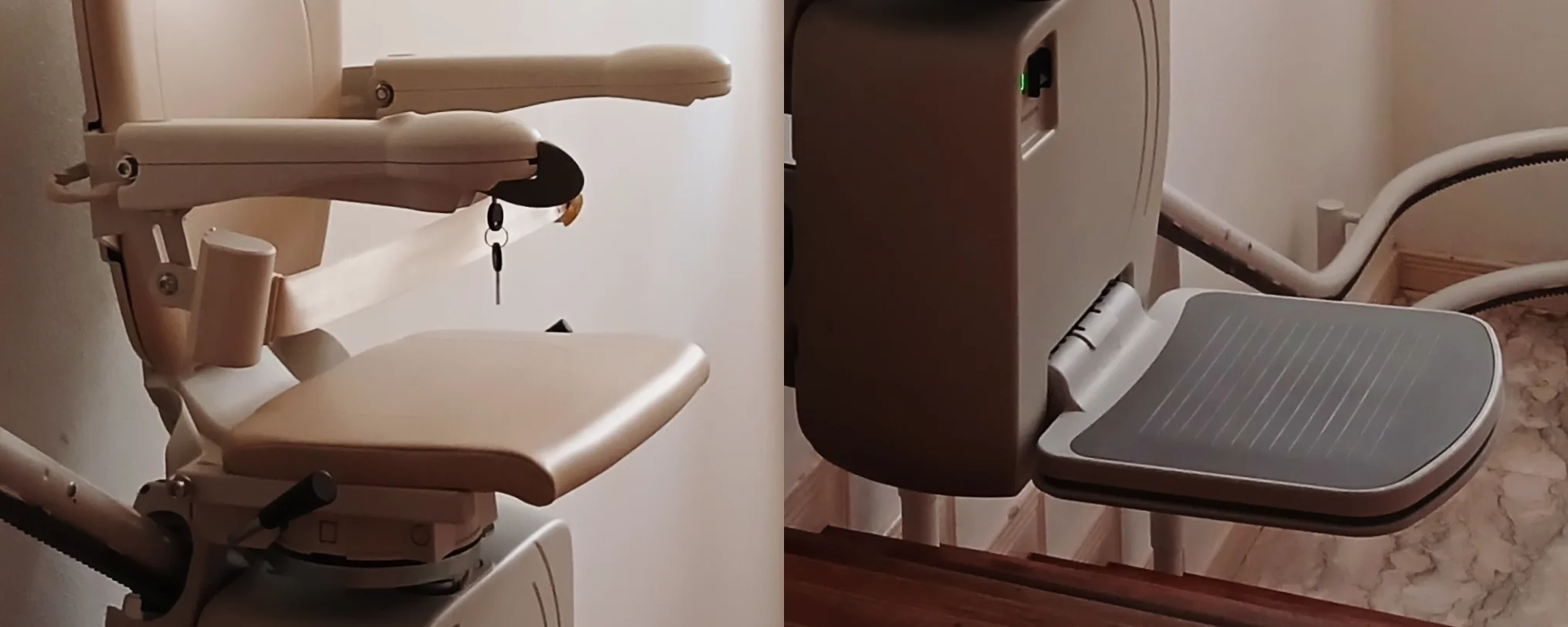
Ensuring the safety of elderly or mobility-impaired family members is the primary concern when modifying a home. While many homeowners focus on comfort and design, the most critical aspect of any mobility device is its adherence to rigorous stairlift safety standards. In the global market, the gold standard for these devices is EN 81-40, a comprehensive European regulation that dictates exactly how a stairlift must be engineered, manufactured, and installed to prevent accidents.
What is the EN 81-40 Standard?
EN 81-40 is a harmonized European standard specifically titled "Safety rules for the construction and installation of lifts — Special lifts for the transport of persons and goods — Part 40: Stairlifts and inclined lifting platforms intended for persons with impaired mobility."
For a lift to be certified under this standard, it must pass a battery of stress tests and include specific mechanical fail-safes. In the Philippines, where local regulations like BP 344 (The Accessibility Law) focus primarily on dimensions and architectural access, referring to EN 81-40 provides a much deeper layer of mechanical and electrical assurance for the individual user.
Key Mechanical Fail-Safes Required by EN 81-40
A certified stairlift is not merely a motorized chair; it is a sophisticated piece of heavy machinery with multiple redundant systems. Under EN 81-40, several key features are mandatory:
- The Overspeed Governor and Safety Gear: If the lift’s motor fails or the carriage begins to descend faster than its rated speed, a centrifugal mechanical governor triggers the safety gear—a mechanical brake that stops the lift instantly.
- Sensitive Edges and Obstacle Sensors: Pressure-sensitive edges on the footplate and motor carriage detect objects on the stairs, immediately cutting power to prevent accidents.
- The "Deadman" Control System: The standard mandates a constant pressure control, ensuring the lift stops if the user releases the toggle or button.
Electrical Standards and Emergency Provisions
Given the tropical climate and the occasional instability of power grids in many Philippine provinces, the electrical requirements of EN 81-40 are particularly relevant.
Most modern lifts operate on a 24V DC system to eliminate the risk of high-voltage shock. Furthermore, the standard requires a Battery Backup System (BBS), ensuring the lift remains operational during a power outage so the user is never stranded mid-staircase. Additionally, a manual emergency lowering mechanism must be present to allow caregivers to move the lift in the event of a total electronic failure.
Ergonomics and Operational Safety
Safety is also found in the functional design of the unit. EN 81-40 dictates that the seat must have a swivel interlock, preventing movement unless the seat is safely locked in the travel position. Safety belts are required to be tested for specific tensile strengths, and key locks are integrated to prevent unauthorized use by children or visitors.
Why Compliance Matters in the Philippines
When selecting mobility technology in the Philippines, verifying EN 81-40 compliance is an objective way to filter out low-quality equipment. Because home lifts are often private installations, they may not always undergo the same scrutiny as commercial elevators. Choosing equipment that adheres to international standards ensures that the mechanical tolerances are suited for long-term use and that the electronics are protected against humidity-related failures common in tropical environments.
Conclusion
Understanding the technical nuances of EN 81-40 allows homeowners and architects to make informed decisions based on engineering reality rather than marketing claims. A stairlift is an investment in independence, and that independence is only sustainable if the equipment remains safe every time it is used. By looking for these specific mechanical and electrical benchmarks, families can ensure that their home remains a safe haven for all generations.