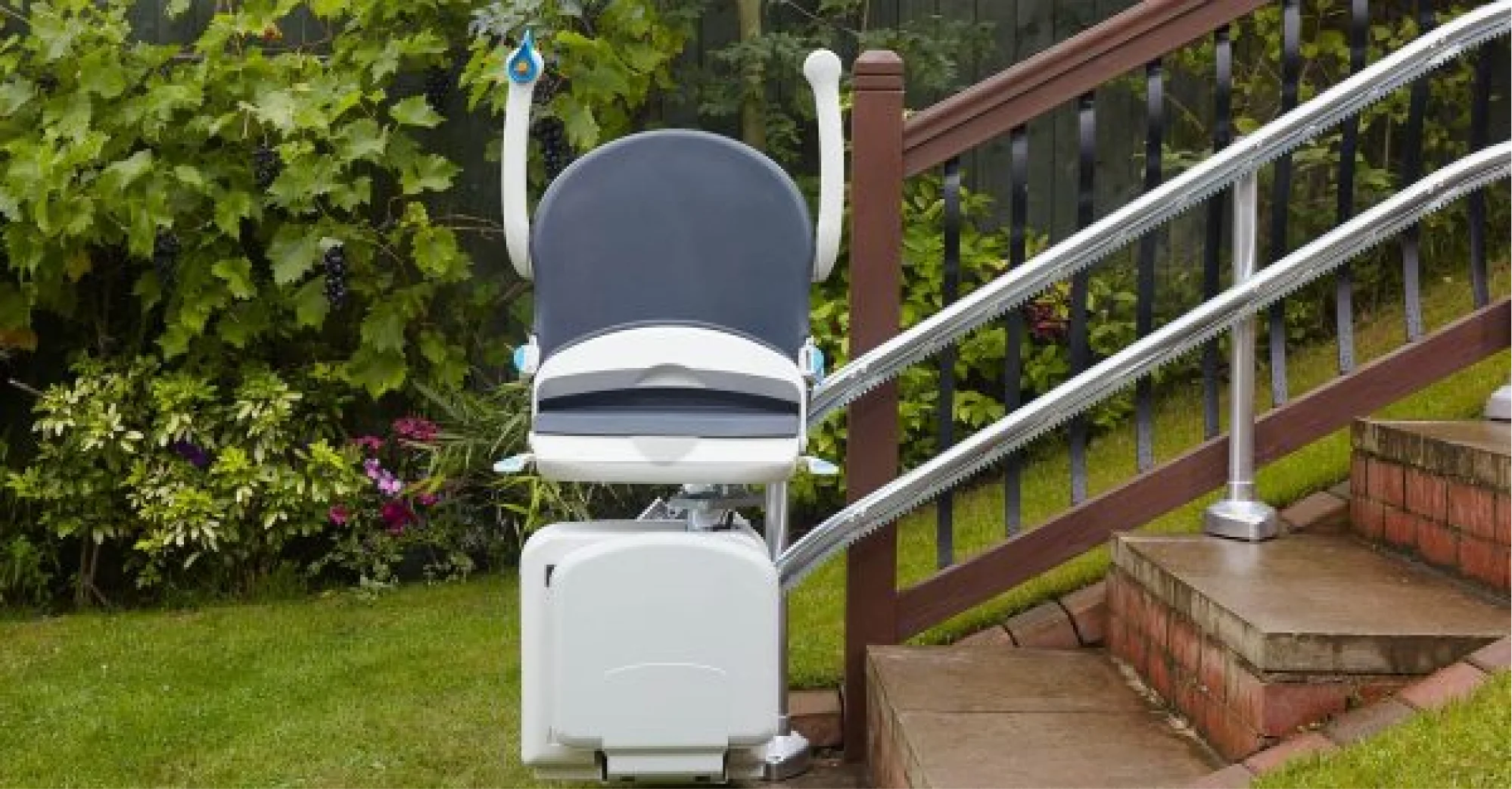
The modern stairlift is often viewed as a simple convenience, but its development represents a century of rigorous mechanical refinement. Understanding the stairlift technological evolution is essential for families evaluating the long-term safety of home accessibility solutions. What began as a rudimentary mechanical chair has transformed into a sophisticated piece of life-safety equipment governed by strict international engineering standards.
The Early Origins: From Incline Elevators to the "Inclin-ator"
While historical records suggest King Henry VIII utilized a "stair throne" operated by servants with ropes, the industrial history of the stairlift began in earnest in the early 20th century. In 1923, an American entrepreneur named C.C. Crispen developed the first functional prototype to assist a friend with mobility challenges.
This early iteration, known as the "Inclin-ator," was essentially a folding wooden chair attached to a rail that ran along the staircase. While revolutionary for its time, these early models relied on basic cable-and-pulley systems. These systems required significant maintenance and lacked the redundant safety features found in contemporary models.
The Transition to Rack-and-Pinion Systems
One of the most significant leaps in the stairlift technological evolution occurred with the move away from cables toward the rack-and-pinion drive system. In mechanical engineering, a rack-and-pinion consists of a circular gear (the pinion) engaging a linear gear (the rack).
- Consistency: Unlike cables, which can stretch or fray over time, a rack-and-pinion system provides a consistent, slip-free movement.
- Durability: Steel-on-steel contact ensures that the lift can handle significant weight capacities without compromising the integrity of the drive.
- Control: This mechanism allows for precise speed regulation, preventing the "jerky" starts and stops associated with older, pulley-based models.
By the mid-20th century, this became the gold standard for reputable manufacturers. It allowed for the development of "overspeed governors"—mechanical brakes that automatically engage if the lift begins to descend too quickly.
From AC to DC: The Battery Power Revolution
For decades, stairlifts were powered directly by the home’s AC mains electricity. This presented a significant safety risk: if a home experienced a power outage, the user could potentially be stranded halfway up or down a staircase.
The shift to DC (Direct Current) battery-powered systems in the late 1990s solved this vulnerability. Modern premium lifts, such as those engineered by brands like Handicare, utilize a continuous charging system along the rail.
- Emergency Functionality: In the event of a power failure, the internal batteries provide enough charge for several full trips.
- Smoother Operation: DC motors allow for "soft start" and "soft stop" technology, which reduces physical strain by gradually increasing and decreasing speed.
- Quiet Performance: The transition to battery power significantly reduced motor noise, allowing for discreet use at any time.
The Digital Age: Sensors and Smart Diagnostics
Today’s stairlifts are no longer just mechanical devices; they are integrated electronic systems. The evolution of sensor technology has introduced multiple layers of protection that were impossible decades ago.
Safety Obstruction Sensors: Modern lifts are equipped with pressure-sensitive pads. If a pet or an object is detected on the stairs, the lift instantly cuts power to the motor, preventing accidents before they happen.
Diagnostic Displays: Current models feature digital diagnostic displays. This allows homeowners to identify simple issues—such as the swivel seat not being locked—without needing professional intervention.
The Impact of International Safety Standards
The engineering of stairlifts is now governed by strict international codes, such as the EN 81-40:2020 in Europe. These regulations dictate everything from the minimum depth of the footrest to the exact speed at which a lift may travel.
These standards ensure that regardless of the home’s architecture, the mechanical stress on the staircase and the physical experience of the user remain within safe, predictable limits. The result is a device that offers independence through a "safety-first" design philosophy.
Conclusion: A Legacy of Reliability
The journey from a wooden chair on a rail to the sophisticated, sensor-laden systems of 2026 highlights a commitment to engineering excellence. The focus has shifted from merely moving a person between floors to ensuring that every movement is governed by redundancy, stability, and ease of use. As technology continues to advance, the integration of smart home features ensures that the stairlift remains a reliable solution for aging-in-place safely.