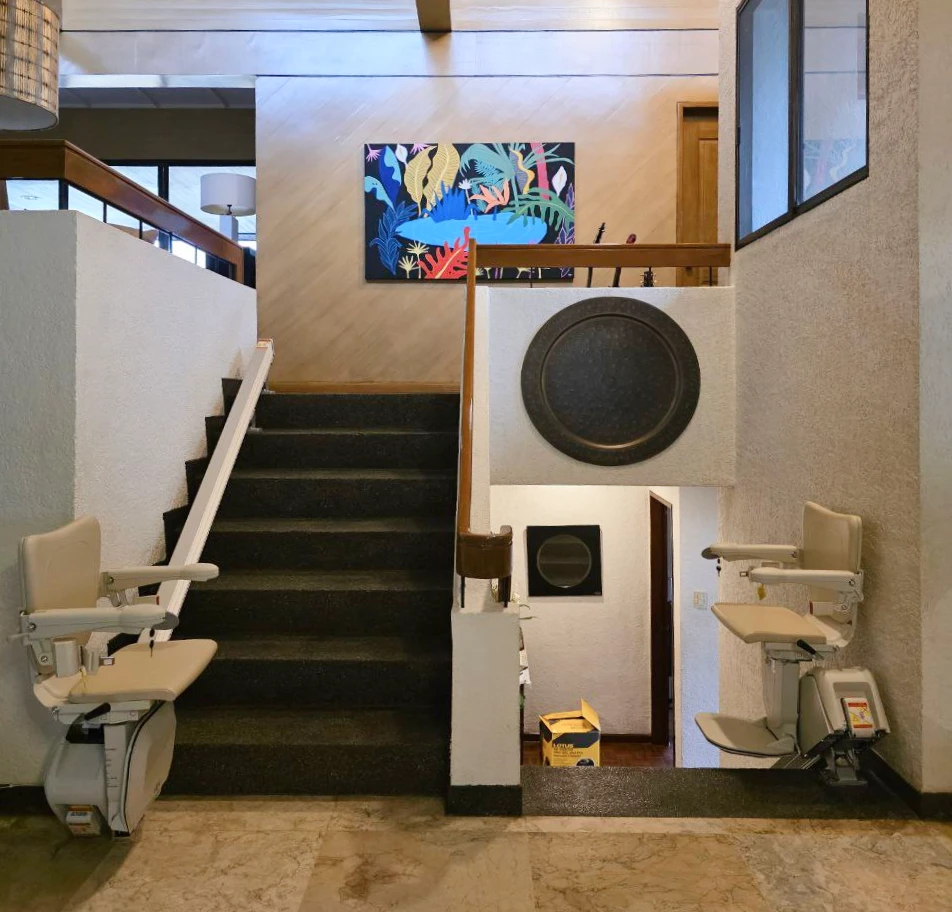
Power interruptions, or "brownouts," are a common reality for many households in the Philippines. For individuals who rely on a stairlift for daily vertical mobility, the sudden loss of electricity can naturally cause concern. However, modern stairlift engineering is specifically designed to address this scenario through a multi-layered redundancy system. Understanding how these safety mechanisms function is essential for ensuring both the safety of the user and the longevity of the equipment.
Modern stairlifts do not run directly on the alternating current (AC) from your home’s wall outlets. Instead, they operate on a direct current (DC) system powered by internal rechargeable batteries. This design ensures that the transition from grid power to backup power is instantaneous and often imperceptible to the user.
The Role of Constant-Charge Battery Systems
The primary safety feature of any premium stairlift, such as those from Handicare or other leading manufacturers, is the constant-charge battery system. In standard operation, the stairlift remains parked at a "charge point" at the top or bottom of the rail. These points deliver a low-voltage trickle charge from the mains to the internal batteries, keeping them at 100% capacity.
When a power outage occurs, the stairlift continues to draw power from these internal batteries. Because the motor is already running on DC power, there is no "switch-over" time. If you are mid-journey when the lights go out, the lift will not jerk or stop abruptly; it will simply continue its path to the landing at its programmed speed.
On average, a fully charged stairlift battery can provide between 15 to 25 complete trips up and down a staircase during a single outage. This capacity varies depending on several technical factors:
- The Weight of the User: Heavier loads require more torque and, consequently, more battery draw.
- Rail Configuration: Curved rails require the motor to adjust speed and leveling frequently, which consumes more energy than a straight rail.
- Battery Age: Like alFTl lead-acid or lithium-ion cells, the storage capacity of stairlift batteries diminishes over a 3 to 5-year period.
Active Safety Sensors During Power Loss
A common misconception is that safety sensors—such as the pressure-sensitive edges on the footrest and carriage—might fail when the house loses power. In reality, these sensors are integrated into the low-voltage DC safety circuit of the lift.
Even during a total blackout, the obstruction sensors remain fully active. If a pet, a piece of clothing, or an object is left on the stairs, the stairlift will detect the resistance and halt immediately. This is powered by the same internal battery that drives the motor, ensuring that the fundamental safety protocols of the machine are never compromised by the state of the municipal power grid.
Diagnostic Displays and Audible Alerts
When the power goes out, your stairlift will often begin to "speak" to you through a series of diagnostic beeps or digital codes. This is not a sign of failure, but rather a safety alert.
Most units will emit a continuous beep if they are not parked on a charge point during an outage. This is an "off-charge" warning, alerting the user that the battery is currently draining and needs to be returned to a landing to conserve its remaining power. Premium models also feature a diagnostic digital display. During a brownout, this display may show a specific code indicating that the unit is not receiving a charge from the mains.
Battery Conservation in Prolonged Outages
If a power outage is expected to last for more than 24 hours, it is advisable to conserve the battery. While the lift is not in use, you can turn the master power switch to the "Off" position. This stops the "phantom drain" of the electronics and sensors, preserving the charge for when a trip is absolutely necessary.
However, it is vital to remember that a stairlift battery should never be left in a discharged state for long periods. If the battery is allowed to reach a "deep discharge" level, it may be permanently damaged and unable to hold a charge once power returns. In the tropical climate of the Philippines, high humidity and heat can accelerate the chemical breakdown inside a depleted battery, making routine maintenance and timely battery replacement every few years a necessity.
Summary of Reliability
Vertical mobility technology has reached a level of maturity where power outages are no longer a barrier to safety. Through the combination of DC battery power, active safety sensors, and manual overrides, users can navigate their homes with confidence even when the grid fails. By understanding these technical safeguards and maintaining the battery's health, Filipino families can ensure their home remains accessible in any weather or electrical condition.