Deciding to install a stairlift is a significant step toward ensuring the long-term comfort and independence of a loved one. In the Philippines, where multi-generational living is a cherished tradition, the home should remain a place of safety for every family member, regardless of their mobility level. However, because this technology is a specialized investment, many homeowners naturally have questions regarding its impact on their daily lives and their property.
This guide provides objective, research-based answers to the most frequently asked questions about stairlift ownership. By understanding the technical and practical realities of these systems, families can move forward with confidence, knowing exactly what to expect from modern accessibility solutions.
Installation and Structural Considerations
One of the most common misconceptions is that a stairlift requires major home renovations or wall reinforcements. For the majority of residential installations, the process is far less intrusive than most expect.
How is the stairlift actually attached?
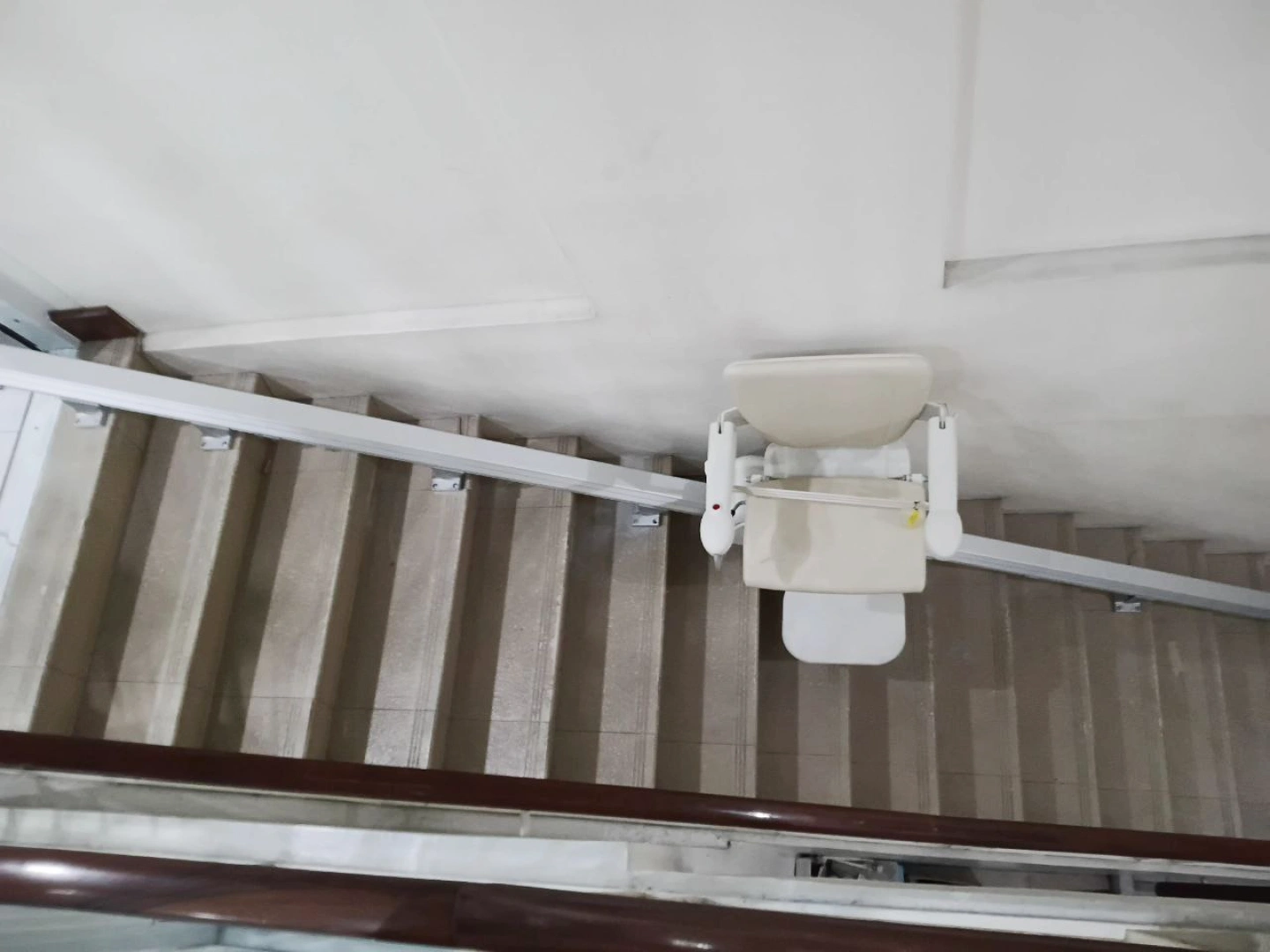
Unlike many household fixtures, a stairlift is not attached to the wall. Instead, the rail is secured directly to the treads of the stairs using small, sturdy brackets. This is particularly beneficial for Philippine homes that may have tiled, wooden, or concrete staircases. Because the weight is distributed across the stairs rather than the wall, the structural integrity of the partition walls is never a concern.
Can it be installed on narrow or curved stairs?
Yes. Modern engineering allows for highly customizable rail systems. For narrow staircases, manufacturers like Handicare offer slim-profile seats and folding footrests that minimize the "footprint" of the lift when it is not in use. This ensures that other family members can still walk up and down the stairs safely.
How long does the installation take?
For a standard straight staircase, the physical installation typically takes between two to four hours. Curved systems, which require more complex rail alignment, may take a full day. Because the rail is pre-manufactured to the exact specifications of the home, there is very little "on-site" construction or mess involved.
Power, Reliability, and Brownouts
Given the occasional power fluctuations or "brownouts" in various regions of the Philippines, reliability during a power failure is a top priority for most families.
What happens during a power outage?
Modern stairlifts are powered by high-capacity batteries that are constantly recharged when the unit is parked at its "charge points" at the top or bottom of the stairs. If the main electricity in the house fails, the lift will continue to operate using its internal battery. Typically, a fully charged battery can provide between 10 to 20 full trips, ensuring that no one is ever stranded during a blackout.
Does a stairlift consume a lot of electricity?
Surprisingly, no. A stairlift is highly energy-efficient. Because it runs on a battery-buffered system, it only draws a small amount of "trickle charge" from a standard household outlet to keep the batteries topped up. The energy consumption is comparable to that of a small household appliance, like a standing fan.
Daily Operation and Safety
Using a stairlift should feel intuitive and stress-free. The technology is designed specifically for users who may have limited strength or dexterity.
- Noise Levels: Modern lifts use DC motors that provide a very quiet, smooth start and stop. The sound is generally described as a low hum.
- Multiple Users: Most systems come with two remote-control handsets. These allow a user to "call" or "send" the lift to the other end of the stairs.
- Obstruction Detection: Pressure-sensitive safety sensors are located around the footplate and the motor housing. If the lift encounters an obstacle, it will automatically and gently stop.
Maintenance and Longevity
To ensure that the investment remains reliable for years to come, a basic understanding of maintenance is essential.
For a standard residential setting, an annual professional service is usually sufficient. This involves checking the battery health, lubricating the rail and gear rack, and ensuring all safety sensors are calibrated correctly. Additionally, because the system is fixed to the stair treads, it can be un-installed relatively easily if the home is sold in the future, leaving only minor marks that can be easily repaired.
An Objective View of Home Mobility
Choosing a stairlift is about more than just technology; it is about finding a balance between the physical needs of a user and the spatial reality of the home. By addressing these frequently asked questions, homeowners can see that modern solutions are designed to be discreet, efficient, and—most importantly—unwaveringly safe. While the initial research phase can feel complex, the daily reality of stairlift ownership is one of simplicity and restored freedom within the home.