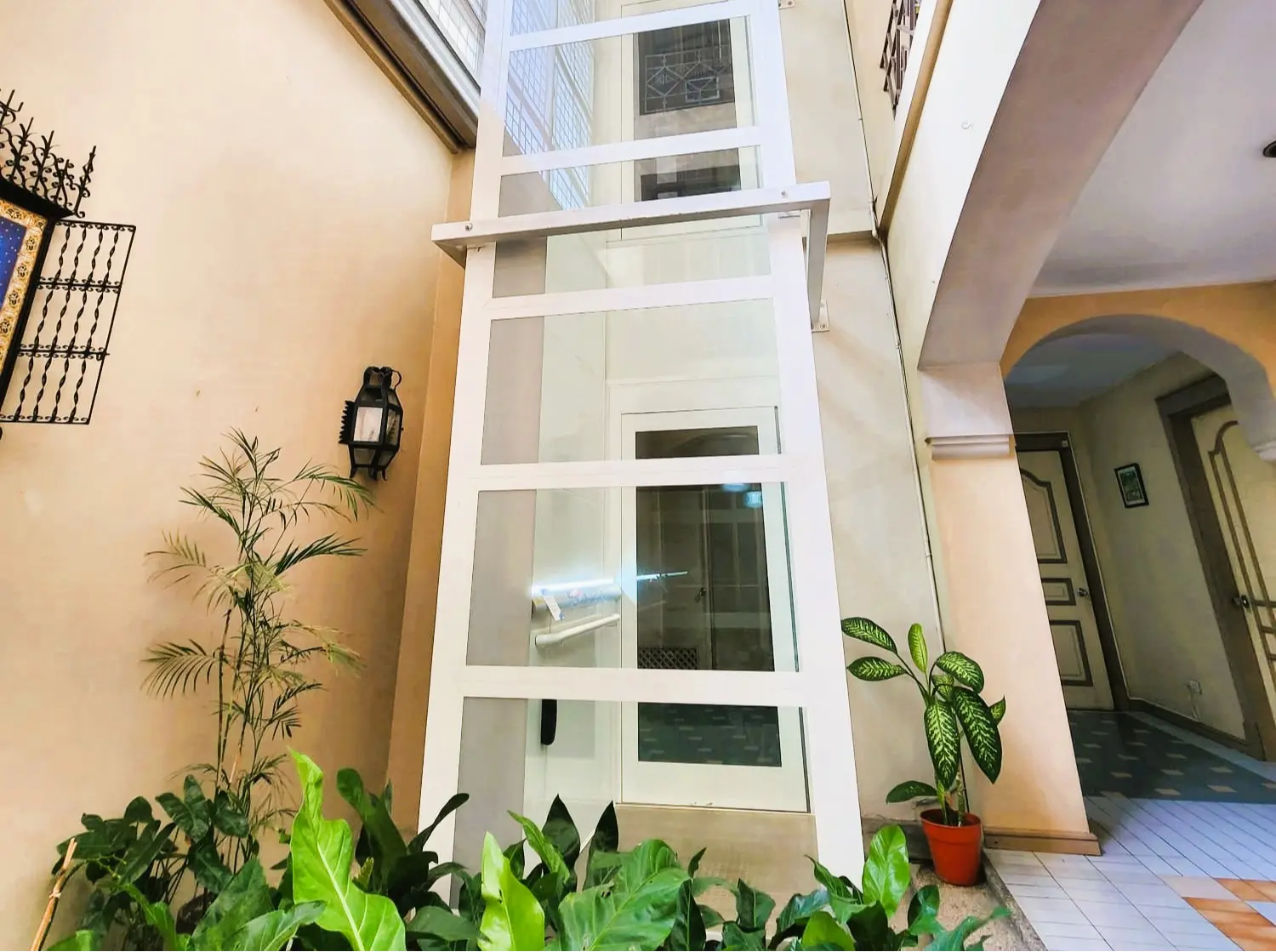
Caring for a bedridden or non-ambulatory family member in a multi-story Filipino home presents distinct physical and structural challenges. While evaluating a home lift price Philippines families must consider how vertical architectural modifications can drastically improve safety, medical accessibility, and long-term caregiving dynamics. When an individual completely loses the ability to walk due to advanced muscular atrophy, severe stroke, or progressive neurological conditions, standard staircases become insurmountable barriers, and manual carrying becomes a profound safety hazard.
Introducing a dedicated residential lift involves more than just structural convenience; it is an essential engineering intervention for long-term clinical care at home. This guide provides an objective analysis of the engineering choices, structural requirements, and safety protocols involved in integrating mobility lifts for non-ambulatory passengers.
The Biomechanics of Caregiving and Transfer Risks
In many traditional Filipino households, multi-generational families live under one roof, where bedrooms are typically situated on the upper floors. When a family member becomes permanently non-ambulatory, transferring them between floors manually or via modified manual carries poses severe risks.
- Caregiver Musculoskeletal Injuries: Repetitive lifting, even with proper form, frequently leads to lumbar strain, disc herniations, and chronic shoulder injuries among family members or private nurses.
- Patient Fall Hazards: Manual transfers on staircases carry a high risk of accidental slips. A fall on a stairway for a frail or recovering patient can lead to catastrophic fractures or secondary head trauma.
- Social and Spatial Isolation: Because manual transfers are physically exhausting, non-ambulatory individuals are often confined entirely to a single room upstairs, isolating them from family activities on the ground floor.
Implementing a mechanical vertical lift standardizes patient transfers, removing human error and physical strain from the mobility equation.
Technical Classification of Long-Term Mobility Lifts
Selecting the appropriate architectural lift requires understanding the specific mechanical frameworks available for residential use. For individuals who cannot walk, options generally fall into three distinct engineering categories.
Through-Floor (Shaftless) Lifts
Through-floor lifts operate on self-supporting structural guide rails without requiring a full concrete hoistway. The lift cabin travels through an aperture cut into the ceiling/floor. When the lift is on the upper floor, the ceiling interface seals completely, preserving floor space below. These systems are highly ideal for single wheelchair users and a caregiver, featuring a compact footprint that minimizes civil works.
Vertical Platform Lifts (VPLs)
Commonly referred to as wheelchair lifts, VPLs feature an open or semi-enclosed platform designed to move a user seated in a wheelchair vertically. These are frequently deployed for low-to-medium travel heights, such as accessing raised ground floors from a garage or navigating split-level layouts. They are highly durable, weather-resistant, and suitable for both indoor and semi-outdoor installations.
Traditional Residential Elevators
For comprehensive, multi-floor access (three or more stories), an enclosed residential elevator utilizing hydraulic or traction drive systems is the standard solution. These require a dedicated shaftway (hoistway) and a small pit at the lowest level. They provide maximum weight capacity, accommodating complex power wheelchairs, medical equipment, and multiple passengers simultaneously.
Structural and Engineering Prerequisites for Philippine Homes
Integrating a residential lift into an existing or newly built Philippine home requires careful evaluation of local architectural practices and utility constraints.
Power Reliability and Electrical Integration
The Philippine power grid frequently experiences voltage fluctuations and localized brownouts. Any residential lift deployed for non-ambulatory care must feature an automatic emergency lowering system powered by an auxiliary battery backup. In the event of a power failure, the system must automatically lower the cabin to the lowest floor and open the doors mechanically to prevent passengers from becoming trapped. Furthermore, systems should ideally run on standard single-phase 220V power to avoid the need for expensive three-phase utility upgrades.
Structural Load Bearing Capacities
For shaftless or through-floor models, structural engineers must verify that the floor joists surrounding the ceiling aperture are properly reinforced with structural steel or additional concrete beams to distribute the load. For traditional elevators, a reinforced concrete pit must be excavated, ensuring adequate waterproofing to counter high water tables common in low-lying areas of Metro Manila and provincial plains.
Compliance with Accessibility Standards
Lifts designed for medical and non-ambulatory use should strictly comply with international safety frameworks such as EN 81-41 (European standards for mobility platforms) or ASME A18.1 (American standards for platform lifts). Key safety elements include full-height light curtains to detect obstructions, hold-to-run controls for deliberate operation, and mechanical interlocks that prevent doors from opening unless the cabin is perfectly level with the floor landing.
Analyzing Market Cost Elements in the Philippines
When navigating the financial implications of home accessibility modifications, families encounter wide variances in pricing. The total capital expenditure is determined by several compounding technical variables rather than a simple flat rate.
- Drive Mechanism and Travel Height: Hydraulic and traction systems that require dedicated shafts incur higher structural and equipment costs than modern shaftless screw-driven systems. Each additional floor adds mechanical complexity and landing door mechanisms.
- Civil Works and Site Preparation: The cost of cutting through concrete slabs, reinforcing structural beams, digging pits, and modifying electrical panels often accounts for a significant percentage of the total project budget.
- Origin of Engineering and Certification: Equipment engineered and manufactured under strict European regulatory frameworks (such as certified Swedish or British manufacturing lines) commands a premium over non-certified alternatives due to the rigorous quality control, durability of materials, and integrated safety sensors.
- Maintenance Overhead: Long-term budgeting must factor in routine preventative maintenance. Systems handling non-ambulatory patients require quarterly or bi-annual technical inspections to check hydraulic seals, screw-drive lubrication, sensor calibration, and battery health.
Clinical Benefits of Specialized Spatial Design
From a rehabilitation perspective, a home lift is a clinical asset that accelerates recovery and slows progressive decline. For stroke rehabilitation patients, the ability to transition effortlessly between a resting environment and a ground-floor physical therapy space maximizes the frequency and consistency of rehabilitation sessions.
For progressive conditions like dementia, Parkinson's disease, or advanced arthritis, maintaining a regular routine of moving to communal family areas helps sustain cognitive engagement and psychological well-being. By removing the physical friction of movement, the residential home lift transforms home care from a logistical challenge into a seamless, dignified experience for both the patient and the caregiving support network.