Returning home after a stroke is a significant milestone in the recovery journey, yet it often presents unexpected physical challenges for both the individual and their family. In many Filipino households, the traditional multi-story layout can suddenly become a barrier to daily life, making vertical mobility a primary concern for long-term safety and comfort. Integrating the right accessibility solutions is not merely about convenience; it is about creating an environment that fosters independence and reduces the risk of secondary injuries during the rehabilitation process.
Understanding the Need for Home Accessibility
Post-stroke recovery often involves navigating changes in balance, coordination, and muscle strength. When a home has multiple levels, the stairs frequently become the most hazardous area. Standard physical therapy usually focuses on gait training, but the energy expenditure required to climb stairs can be exhausting for someone in the early stages of recovery.
By addressing these architectural barriers, families can ensure that the home remains a place of healing rather than a source of frustration. Providing a mechanical means of moving between floors allows the individual to save their energy for prescribed therapeutic exercises and daily activities that contribute to a higher quality of life.
Comparing Vertical Mobility Solutions
When evaluating how to modify a home for post-stroke recovery, two primary options are typically considered: stairlifts and home elevators. Each serves a specific purpose depending on the user's physical capabilities and the home's structural layout.
Stairlifts: The Non-Invasive Option
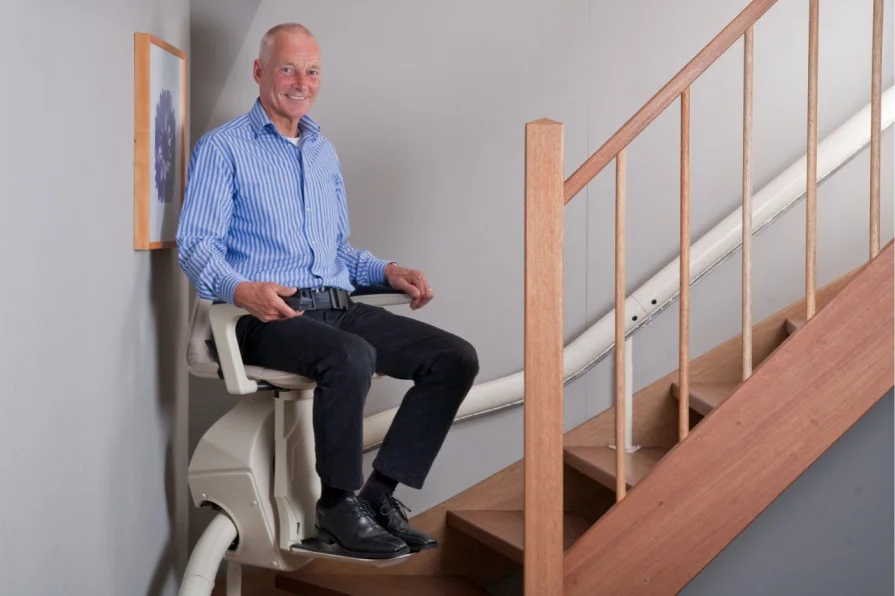
Stairlifts, such as those manufactured by global leaders like Handicare, are often the most straightforward solution for homes where the user has sufficient core stability to sit upright. These systems consist of a motorized chair that travels along a rail mounted to the stair treads.
- Adaptability: They can be installed on both straight and curved staircases.
- Safety Features: Modern units include sensors to detect obstructions and seatbelts to ensure the user remains secure throughout the journey.
- Ease of Use: Simple toggle switches allow for one-handed operation, which is particularly beneficial if the stroke has affected one side of the body more than the other.
Home Elevators: The Comprehensive Solution
For individuals who use wheelchairs or require more significant assistance, a home elevator or a platform lift may be more appropriate. These solutions provide a level-access transition, allowing the user to remain in their wheelchair or walking frame while moving between floors.
- Long-Term Utility: An elevator provides a future-proof solution that accommodates changing mobility needs over several decades.
- Space Efficiency: Contemporary "pitless" designs require minimal structural modification, making them suitable for existing Philippine residences where deep excavation is not feasible.
Safety and Technical Considerations for the Philippine Home
The local environment in the Philippines introduces specific factors that must be considered when installing mobility equipment. Power stability and humidity are two primary concerns that professional engineering services must address during the planning phase.
Power Backup and Battery Systems
Given the occasional power fluctuations in many regions, high-quality mobility units are equipped with internal battery backups. This ensures that even during a "brownout," the lift remains operational, preventing the user from being stranded between floors. It is essential to verify that the equipment uses a "constant charge" system to keep the batteries at peak performance.
Ergonomics and Ease of Access
Post-stroke recovery often involves hemiparesis (weakness on one side). Therefore, the placement of controls is vital. Controls should be repositionable to the "strong" side of the user. Furthermore, the "swivel" function on a stairlift—which allows the chair to turn toward the landing—is a critical safety feature that prevents the user from having to step off the chair onto the top of the stairs.
The Psychological Impact of Independence
The ability to move freely within one's own home has a profound impact on mental health. Post-stroke depression is a common challenge, often exacerbated by a feeling of confinement to a single room or floor. When an individual regains the ability to join the family for meals on the ground floor or access their bedroom upstairs without help, it reinforces a sense of agency.
This independence often accelerates physical recovery. When the "fear of falling" on stairs is removed, individuals are more likely to move around their home more frequently, which helps in maintaining muscle tone and circulation.
Planning for a Safe Transition
The transition from a clinical setting to a home setting should be planned well in advance of discharge. A thorough assessment of the home’s layout, the user’s current physical state, and their projected recovery path is necessary. Consulting with both medical professionals and accessibility engineers ensures that the chosen solution meets both the physical requirements of the user and the structural requirements of the building.
Summary of Home Mobility Benefits
Integrating vertical mobility solutions into a recovery plan provides a multi-layered benefit system for the household. It reduces the physical strain on caregivers, who might otherwise have to assist with difficult stair navigation, and it provides the user with the dignity of self-sufficiency. By prioritizing safety and accessibility, Filipino families can transform their homes into supportive spaces that honor the recovery journey and provide peace of mind for everyone involved.