Navigating a multi-generational home in the Philippines often brings a unique set of challenges, especially when family members begin to experience limited mobility. Whether it is a grandparent who finds the stairs increasingly difficult or a family member using a wheelchair, the need for effective home mobility solutions becomes a priority. Understanding the differences between a home lift, a platform lift, and a stairlift is the first step in creating a safe, accessible environment that preserves independence and quality of life.
The Philippine residential landscape, ranging from vertical townhouses in Metro Manila to sprawling estates in provincial areas, requires a tailored approach to accessibility. Choosing the right equipment depends heavily on the user’s physical needs, the home's architectural constraints, and the desired level of comfort. By stripping away the technical jargon, we can look at these three primary solutions through a practical lens.
Understanding the Stairlift: The Practical Choice for Stairway Mobility
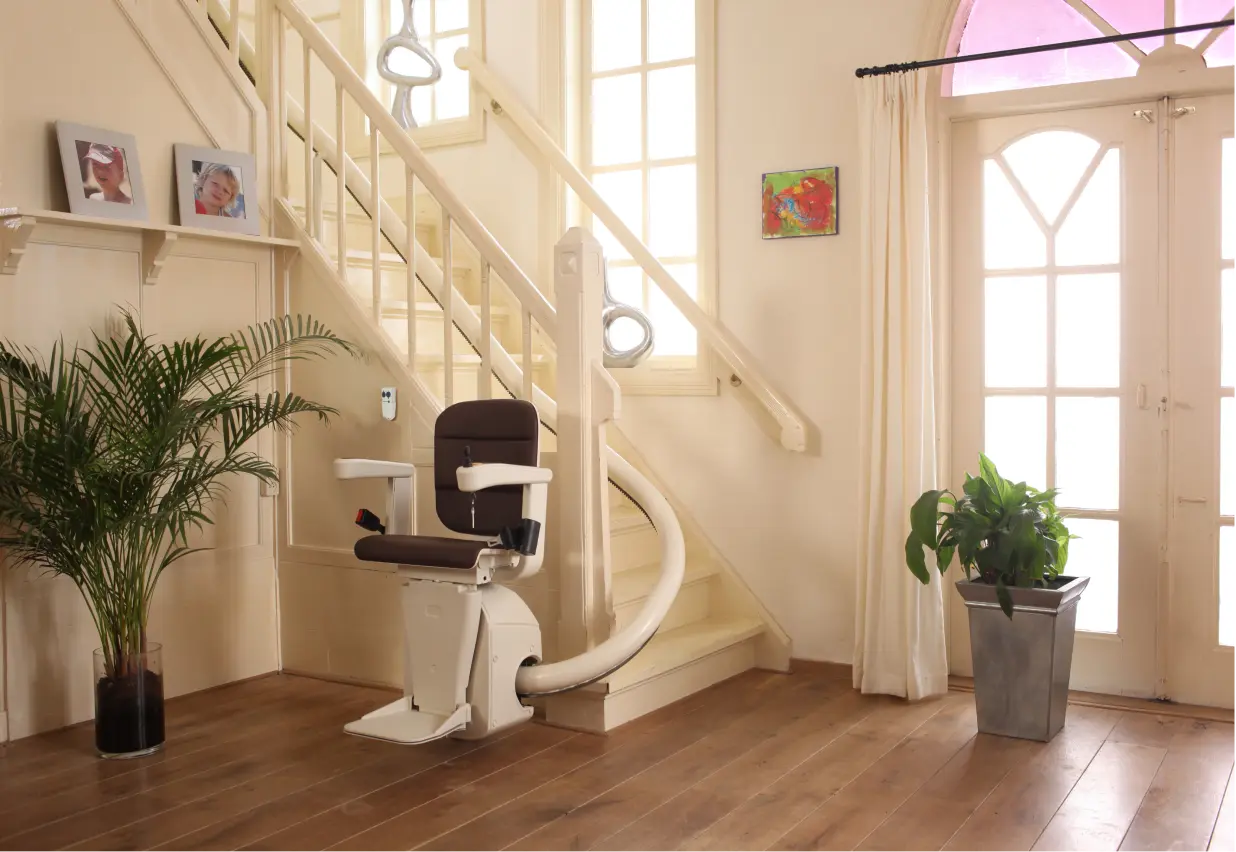
A stairlift is often the most straightforward solution for individuals who can still sit and stand independently but struggle with the physical exertion of climbing stairs. Often referred to as a "chair lift," this device consists of a motorized seat that travels along a rail mounted directly to the stair treads rather than the wall.
Because the rail follows the path of the stairs, stairlifts are highly versatile. They can be installed on straight staircases or custom-curved designs common in many Filipino homes. One of the primary advantages of a stairlift is the minimal impact on the home’s structure. There is no need for construction, wall reinforcements, or deep pits. Most installations can be completed in a single day, making it an efficient choice for families needing immediate assistance.
However, it is important to note that a stairlift is designed for a single seated passenger. If the user relies entirely on a wheelchair, they would need to be able to transfer themselves from the wheelchair to the stairlift seat and have another wheelchair waiting for them at the top of the stairs. For those with total reliance on a mobility device, other options may be more suitable.
The Platform Lift: Essential for Wheelchair Independence
When a family member uses a wheelchair or a mobility scooter, a platform lift—also known as a vertical platform lift (VPL) or "porch lift"—is often the most effective solution. Unlike a stairlift, which carries a seated person, a platform lift features a flat surface that carries both the user and their mobility device together.
Platform lifts are essentially open-air elevators designed to bridge shorter vertical distances. In the Philippines, these are frequently used to navigate the few steps leading from a driveway to a main entrance or to move between split-level floors. They are robust, weather-resistant, and designed to handle heavier weight capacities than a standard stairlift.
From a technical standpoint, platform lifts require more space than a stairlift but significantly less than a full home elevator. They can be installed with or without a shaft, depending on the height and safety requirements. While they offer high utility, they are more functional in appearance and are generally chosen for their reliability in providing total wheelchair accessibility rather than for aesthetic integration.
The Home Elevator: Premium Full-Cabin Mobility
A home elevator is the most comprehensive mobility solution, providing a fully enclosed cabin that moves between multiple floors. Unlike commercial elevators found in malls or offices, residential elevators are scaled for private use and can be customized to match the interior design of a home.
The primary benefit of a home elevator is the high level of comfort and the ability to transport multiple people, groceries, or furniture between floors simultaneously. For a homeowner looking to "future-proof" a new construction or a major renovation, an elevator offers the most seamless experience. It adds significant value to the property and provides the most "natural" feel of moving between levels.
The trade-off for this convenience is the requirement for structural modification. A standard home elevator typically requires a hoistway (shaft), a pit at the bottom, and a machine room or overhead space for the motor. While modern "pitless" or "vacuum" models have reduced these requirements, a home elevator still represents a significant architectural commitment compared to a stairlift or a platform lift.
Key Factors for Filipino Homeowners to Consider
- The User’s Long-Term Needs: Is the mobility challenge temporary, or is it a progressive condition? If there is a possibility of transitioning to a wheelchair in the future, investing in a platform lift or elevator now may prevent the need for a second installation later.
- Home Layout and Space: Philippine townhouses often have narrow staircases. A stairlift with a folding seat and footrest can save space for other family members. Conversely, if there is a courtyard or a side area, an outdoor platform lift might be the most space-efficient way to bypass stairs entirely.
- Installation and Power: It is essential to consider safety features like battery backups. In areas prone to power fluctuations, premium mobility solutions often include systems that allow the device to complete its journey or return to a safe landing during a brownout.
- Structural Integrity: Before choosing an elevator, a structural assessment is necessary to ensure the home can support the shaft and the mechanical load. Stairlifts, by comparison, put very little stress on the building.
Conclusion: Choosing the Right Solution for Your Family
Selecting a mobility solution is about more than just moving between floors; it is about restoring the freedom to enjoy one’s entire home. A stairlift provides a quick, low-impact way to overcome stairs for those who can sit comfortably. A platform lift offers the necessary heavy-duty support for wheelchair users. Meanwhile, a home elevator provides the ultimate in luxury, convenience, and long-term accessibility.
By focusing on the specific physical requirements of the user and the architectural possibilities of the residence, Filipino families can make an informed decision that ensures safety and comfort for years to come.