Creating a home that embraces everyone—regardless of age or physical ability—is one of the most meaningful investments a Filipino family can make. In the Philippines, where the "Sandwich Generation" often balances the needs of growing children and aging parents under one roof, the concept of home accessibility is moving from a luxury to a necessity. Making your home more accessible doesn't always require a massive renovation or a commercial-grade overhaul; often, it begins with thoughtful, small-scale adjustments that prioritize safety, dignity, and independence.
For many families, the realization that a home needs modification comes during a moment of struggle—a slip in the bathroom or the growing difficulty of navigating the stairs. However, by taking a proactive approach to accessible home modifications, you can transform your living space into a sanctuary that supports every family member's lifestyle for years to come.
1. Optimize Lighting for Safety and Comfort
One of the simplest yet most overlooked aspects of accessibility is visibility. As we age, our eyes require more light to navigate spaces safely, and shadows can often hide potential trip hazards. In many traditional Filipino homes, lighting tends to be concentrated in the center of the room, leaving corners and transitional areas like hallways in the dark.
Start by increasing the "lumen" count in high-traffic areas. Swap out dim bulbs for brighter, warm-white LED options that mimic natural daylight without being harsh. Focus specifically on "task lighting"—under-cabinet lights in the kitchen, motion-sensor lights in the hallway for midnight trips to the bathroom, and well-lit entryways. A well-lit path is the first line of defense against accidental falls.
2. Address Flooring and Threshold Transitions
The transition between rooms is a common site for accidents. In the Philippines, many homes feature slight "steps" or high thresholds between the living room and the kitchen, or the indoor area and the "dirty kitchen" or patio. These small height differences can be significant barriers for those using walkers or those who may have a shuffled gait.
Consider installing low-profile transition strips or small rubber ramps to smooth out these elevations. Furthermore, evaluate your flooring material. If your home features high-gloss ceramic tiles, which can become incredibly slippery during the humid rainy season, consider applying non-slip coatings or strategically placing low-pile, rubber-backed rugs. Ensuring the ground beneath your feet is predictable and stable is a cornerstone of a barrier-free environment.
3. Enhance Bathroom Security
The bathroom is statistically the most hazardous room in the home due to wet surfaces and the physical demands of sitting and standing. Making this space accessible doesn't mean it has to look like a hospital wing. Simple additions like high-quality grab bars near the toilet and inside the shower provide essential points of contact for balance. When choosing grab bars, look for finishes like brushed nickel or matte black that complement your existing fixtures.
- Grab Bars: Install them at key entry and exit points in the shower.
- Comfort Height Toilets: Reduces strain on the lower body.
- Non-Slip Surfaces: Vital for wet areas like bathrooms and laundry zones.
4. Rethink Doorways and Hardware
Physical strength and grip can change over time, making standard round doorknobs surprisingly difficult to operate. One of the most "user-friendly" modifications you can make is swapping out traditional knobs for lever-style handles. Lever handles allow doors to be opened with a simple downward push, even using an elbow or a closed fist if one's hands are full or weak.
If a family member uses a wheelchair or a wide walker, you might also look at the width of your doorways. While widening a structural wall is a larger project, you can gain a few extra inches of clearance simply by installing "swing-clear" hinges. These specialized hinges allow the door to swing completely out of the frame, providing an unobstructed path for mobility aids.
5. Simplify Vertical Mobility
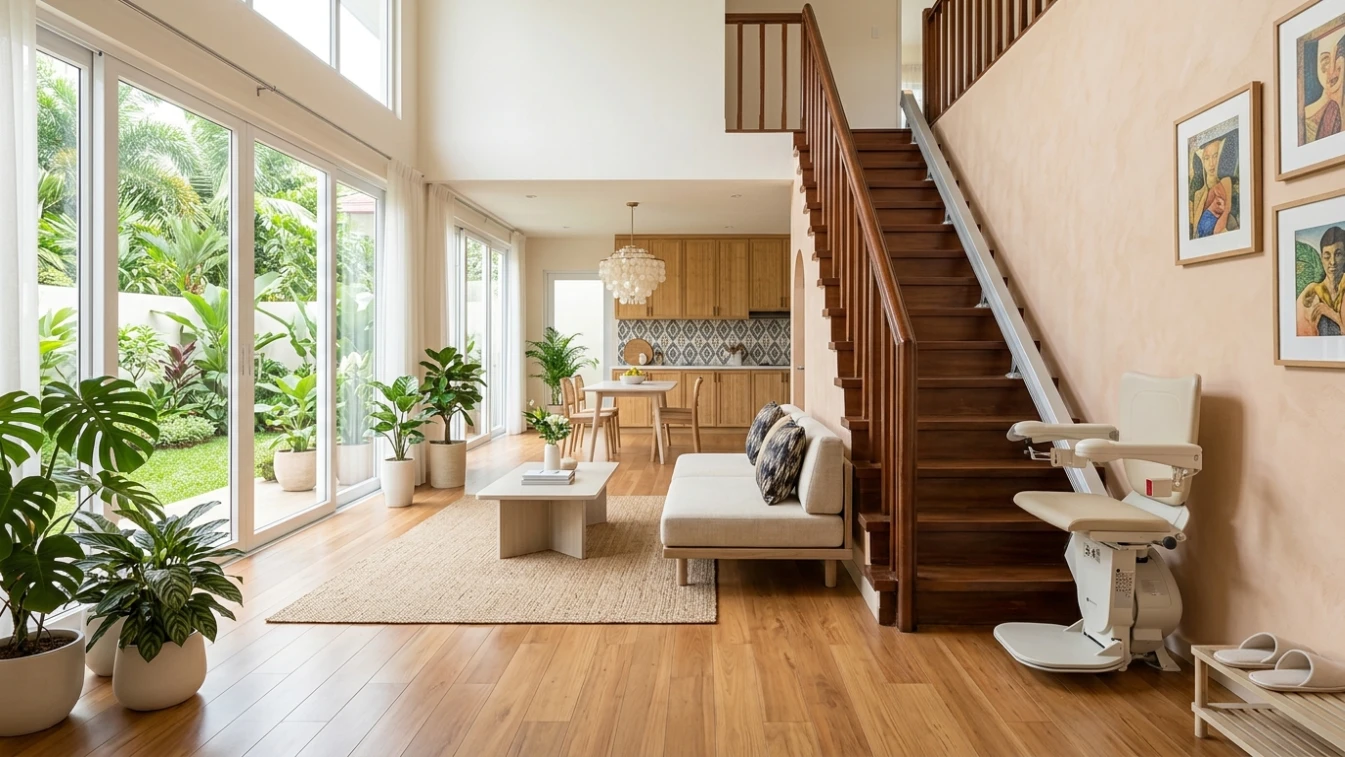
For many Filipino families living in two or three-story townhomes, the stairs eventually become a barrier that limits the senior members of the family to the ground floor. This "social isolation" within the home can be disheartening. Modern solutions have made vertical mobility much more approachable and aesthetically pleasing.
Introducing a chair lift or a home lift is a transformative step. For example, premium brands like Handicare offer stairlifts designed specifically for the tight turns and unique layouts of residential staircases. These systems allow individuals to move between floors smoothly and safely, preserving their access to upstairs bedrooms or family balconies. Unlike bulky commercial elevators, modern home mobility solutions are designed to fold away when not in use, ensuring the staircase remains clear for other family members.
Conclusion
Accessibility is not about highlighting limitations; it is about expanding possibilities. By implementing these five modifications, you aren't just "fixing" a house—you are creating an environment where memories can continue to be made across generations. Whether it is through better lighting or the installation of a premium lift, the goal is a home that remains a place of comfort, safety, and pride for everyone who lives there.